|
I'll be presenting a training session on Making the Major Gift Ask for AFP's New Mexico chapter next month. April 13th! Solicitation coaching! Networking! Lunch + cake! Details here: AFP Link.
1 Comment
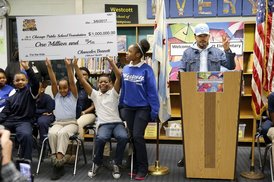 Chance, totally making his dad's day. Chance, totally making his dad's day. Chance the Rapper wrote a huge check to the Chicago Public Schools foundation today. At just 24 years old, the Grammy winning musician has been in the national spotlight all of about 30 minutes. Most music stars wait decades to make such a major philanthropic move - if ever. But he and Chicago go way back - and to understand why this gift is so cool, you have to know about Chance, his dad, and their remarkable Chicago roots.
Chance's father is Ken Williams-Bennett, a native Southsider and former aide to Chicago's legendary African-American mayor Harold Washington. He later worked for Illinois state Senator Barack Obama before the presidential run, and now serves as deputy chief of staff to Mayor Rahm Emanuel. That's a fierce legacy of civic love and service by any measure, and you can bet Chance's dad had some ideas about the kind of serious public work he wished to see his son do. Chance grew up with the Obamas in his life, and as his star rose, he helped President Obama with the My Brother's Keeper Initiative. While Chance felt called to music early, there are two now-famous things most Chicagoans know about his career: 1) he dropped out of college to pursue hip hop and 2) his dad did what a lot of fathers would do in that situation - he completely flipped out. The pair weren't on speaking terms for a long time following the move. The fates conspire for all of us. Chance's soaring career is the result of an unknowable alchemy - a mix of talent, grit, and luck. But that $1 million gift to one of the largest and poorest public student bodies in the U.S.? I'm going to credit the enduring influence of an awesome dad for that one. I'm so proud to be supporting FUSION Theatre Company as it helps to lead the Arts and Culture district work happening in Downtown Albuquerque right now. This is how you use the arts to make change happen in a city -- change that builds the economy, leverages the unique cultural assets of a region, and raises the quality of life for everyone in the community. Forward!
 An article in Albuquerque Business First today touts the use of LinkedIn as a free, easy relationship mapping tool to prospect for major gifts. While it’s not the worst fundraising advice I’ve ever heard (in a category of journalism that can often range from the tone deaf to the truly misleading), it is flawed. Here are a few reasons why you shouldn’t over-rely on LinkedIn for this task, especially for gifts that trustees will solicit:
So my advice – whether you have a consultant or are doing this solo – is that the quickest, most effective method is still a largely human-centered one:
 Here's my outline for a thorough yet succinct major gifts donor bio. It's universally useful and not too fussy. I use it constantly.
Primary Names Aliases (include nicknames and maiden names) Record number in your database Contact info Photo Relationship with Your Organization • How they became connected to your organization • Years of involvement, key groups and leadership roles • Current donor status • Key relationships within your organization, especially board • Two sentence max summary on last key contact with organization Professional and Civic Background • Companies and leadership roles • Important business info, especially newsworthy events • Involvement in other nonprofits or civic groups • Giving to other organizations (quick to read chart form is ideal) • Schools attended, alumni roles Family and Personal Background • Key family members and relevant history • Spouse, basics about children • Residences • Interests, hobbies not otherwise covered • Anything else important that didn’t fit in above Optional: Possible Interest Areas • Briefly identify 3-4 possible interest areas within your organization Footer: Your name, date, and possibly list key sources  One more place in life to cultivate balance. Namaste. One more place in life to cultivate balance. Namaste. Board work is one of the most rewarding things about nonprofit development. No matter what your structure, it’s absolutely where you learn all of the big leadership lessons for your organization, and in my opinion it’s the engine that either gives it vitality - or not.
Vitality is about balancing all the right elements and getting them to play well together. Here are the five profiles of people that I think you absolutely need on your board – plus a rare one that’s a huge find.
 This isn't a phone. It's a stewardship machine. This isn't a phone. It's a stewardship machine. I've been working with a nonprofit in ABQ that wants to improve the attention they give their top sponsors once they've signed on. This type of stewardship work is critical to making sure your sponsors find value in their support and want to renew with you next year. While it's natural to focus on creating VIP-only events - and those are terrific - there are other ways to give extra attention without a huge drain on your resources. Here are a few favorites:
1. High-touch RSVP outreach: Any time you invite a key VIP to any event, give them a personal call or email a few days before the RSVP deadline. Top donors are super busy and they'll appreciate the heads up in advance of the respond date. (Avoid reaching out the day of the deadline. My experience is that VIPs feel guilty for not being on it sooner.) Simply share that you hope to see them attend. If they can't, let them know they'll be missed. It's a warm, genuine interaction that boosts your VIP engagement, and you decide exactly who and how many to reach out to. You can even delegate this one to another staffer and it still works beautifully. 2. Think logistically: Any time you extend an invitation to a VIP, whether formally or not, think through the logistics that they'll have to negotiate to show up - and clear the path. Chances are they'll be running through a hectic day and getting stuck along the way will only have them showing up late or frustrated. Are they unfamilar with this venue? Need parking? Is there valet right outside? Do you know if construction down the block will snare traffic? Will coat check take more than a minute? Share the useful details upfront, either in the invitation if it's a quick and tidy explaination, or after they RSVP. Everyone loves it when someone else saves them time and aggravation. 3. Treat their assistant like family: An assistant is far more than a gatekeeper. That person at the other end of the line is more like an extension of the family, often running your VIP's personal affairs as well as their office. They can't live without that person, and neither can you if you want to build a strong relationship with them. In my experience, assistants run the spectrum from efficient air traffic controllers to quirky, quirky, quirky. It's your job to figure out how to work with each one best. Build trust with them, and think to offer them an occassional perk along the way, and it's a win-win-win. |
AuthorEmilie, Principal and Owner Archives
February 2024
Categories
All
|
 RSS Feed